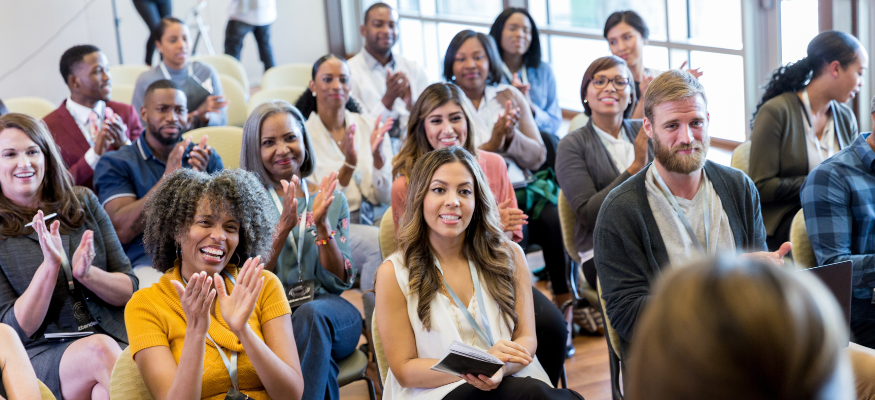


There’s a conversation that happens at every HR leadership summit. It just rarely happens in the sessions.
You’ve been there. The keynote ends, someone famous walks off the stage, and you find yourself in the corridor with a coffee you don’t particularly need, talking to a CHRO from a company you’ve always admired. She’s been through exactly the reorganisation you’re about to start. She knows what didn’t work. She has opinions she’d never share on a panel.
Fifteen minutes later, someone announces the next session and you both drift back inside.
That conversation — the corridor conversation, the coffee break conversation — is consistently rated some of the most valuable part of any HR leadership summit. And it ends just as it’s getting good.
Keynotes, Panels, Workshops: All Valuable. All Incomplete.
There’s nothing wrong with the traditional conference format. A sharp keynote from someone who’s thought deeply about AI and the future of work can reframe how you see the next two years. A well-run panel brings three or four perspectives into the same room. A workshop gives you frameworks you can take back and use.
But none of them give you the one thing the corridor conversation does: unfiltered peer intelligence from someone who has already lived through your problem.
That insight is extraordinarily difficult to get any other way. Consultants charge considerable sums to package and deliver versions of it. Research reports attempt to aggregate it. LinkedIn posts approximate it. But there is no substitute for sitting across from a peer who has already made the mistake you’re about to make — and is willing to tell you, honestly, what happened.
The challenge is structural. Traditional conference formats aren’t designed to surface that knowledge. They’re designed for broadcast: experts transmit, audiences receive. The wisdom already in the room stays largely locked inside the people who brought it.
Birds of a feather, as it goes, need more than fifteen minutes and a flat white.
What We Built for Horizon Summit Amsterdam
For this year’s HR leadership summit in Amsterdam (Horizon Summit, November 10 and 11) we’ve redesigned the programme around a simple premise: the most important expertise in the room isn’t on the stage. It’s distributed across the 300 senior HR leaders sitting around you.
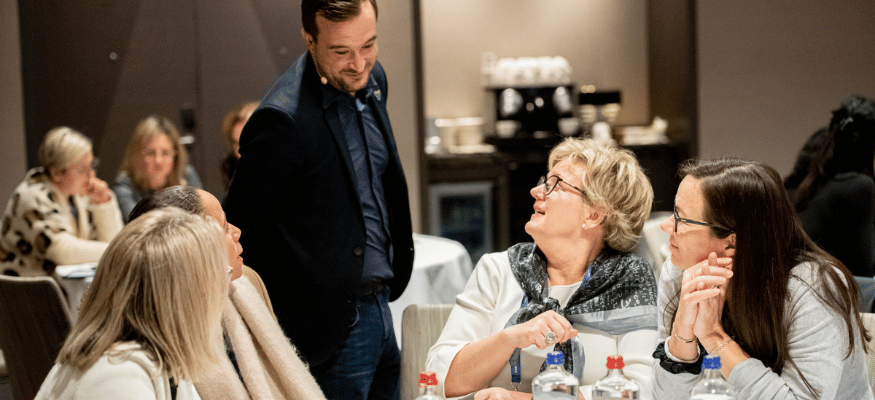
The table-top discussions replace the standard breakout model entirely. Before you arrive, you choose a theme that reflects your most pressing challenge right now — AI and workforce strategy, talent architecture, leadership culture, reward and performance, HR’s credibility and influence, and seven others. Your table of eight to ten people chose the same theme for the same reason.
An experienced facilitator guides ninety minutes through four phases: framing the challenge, structured peer exchange, documented conclusions, and a three-minute summary back to the full room. Every table does this simultaneously. Every table’s findings come back to the main stage. Your ninety minutes returns the collective intelligence of thirty groups — not just the eight people sitting with you.
You leave with something specific. Not a photograph of a slide. Not a note you scribbled and will never open. A documented set of conclusions, peer-tested and grounded in real organisational experience.
The Speakers Set the Context. The Tables Do the Work.
The speaker faculty at Europe’s flagship HR leadership event, Horizon Summit 2026 in Amsterdam features CHROs and Chief People Officers from ABN AMRO, AkzoNobel, Prosus & Naspers, Standard Bank, Emirates Group, Lloyds Banking Group, South Pole, UNHCR, and others across banking, logistics, tech, sustainability, and retail.
They set the context. They bring the global perspective. They anchor the day.
But the table-top discussion is where you’ll solve something.