

The HR Conference circuit has a problem — and most people in the room already know it. Senior HR leaders fly across continents, sit through back-to-back keynotes, wander exhibition floors, and return home with a stack of business cards but very little that changes how they lead. Vendors invest heavily in booths, speaking slots, and sponsorship packages, only to find that the people they actually need to reach never made it past the plenary hall.
The format that once served the HR industry well is now running on inertia. And in 2026, both sides of the room — the buyers and the builders — are asking the same question: isn’t there a better way to do this?
The Problem With the Traditional HR Conference Model
For decades, the standard HR Conference has followed a predictable formula. A large venue, a headline speaker or two, dozens of breakout sessions, and an exhibition hall where vendors compete for attention. The logic is straightforward: gather a large audience, give them content, and create space for commercial conversations on the side.
But the cracks in this model have been widening for years. CHROs and their direct reports operate under enormous time pressure. When they commit two or three days to an event, they expect strategic value — not a glorified product showcase. Yet too many conferences still measure success by headcount rather than the quality of dialogue that takes place inside the room.
For vendors, the picture is equally frustrating. Exhibition halls reward volume over relevance. The people stopping by the booth are often mid-level professionals browsing the floor, not the C-suite decision-makers the investment was designed to reach. Conversations are shallow, follow-up rates are low, and the pipeline impact is difficult to justify against the cost.
The result is an experience that leaves both audiences underserved. HR leaders leave without the peer-level exchange they crave, and vendors leave without the strategic access they paid for.
Why Peer Exchange Is Replacing Passive Formats
The shift we are seeing across the HR Conference landscape in 2026 is not cosmetic. It is structural. The most progressive event organisers are moving away from content-heavy, stage-driven formats and toward models that prioritise interaction, intimacy, and peer-driven learning.
There is a growing body of evidence — from executive education, leadership development, and even behavioural science — that senior leaders learn best from each other. Not from slides. Not from panels where five people share a stage and each gets seven minutes. But from structured, candid, small-group conversations where real challenges are discussed openly and practical experience is exchanged without filters.
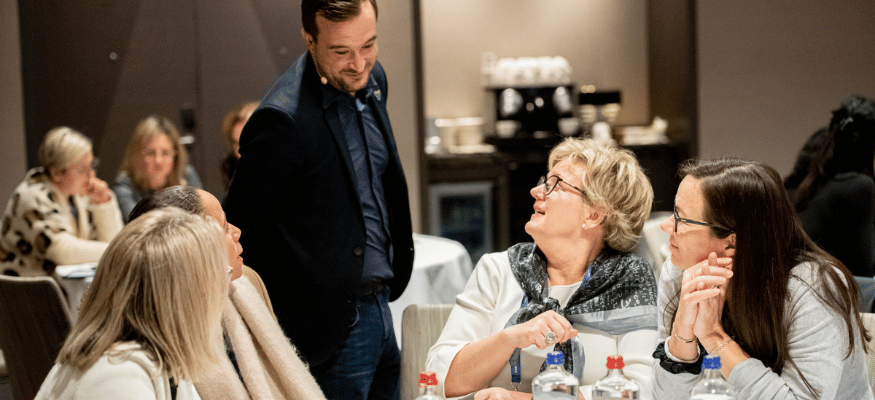
This is the principle behind formats like curated tabletop discussions, moderated roundtables, and invitation-only working sessions. In these settings, a CHRO dealing with a post-merger cultural integration challenge can sit across from a peer who navigated the same thing eighteen months ago. A Head of People Analytics can pressure-test their data governance approach with someone who has already presented theirs to a sceptical board. The learning is immediate, contextual, and actionable.
For vendors, this shift is equally significant. In a collaborative format, solution providers do not pitch from a podium. They contribute as subject-matter facilitators — leading discussions on topics aligned with their expertise and engaging directly with the people whose problems they can solve. This changes the dynamic entirely. Instead of competing for attention, they earn trust through relevance.
What the Ideal HR Conference Format Looks Like
If we were to design an HR Conference from scratch in 2026 — with no legacy constraints, no inherited exhibition model, no default agenda template — what would it look like?
A curated, senior audience. Not hundreds or thousands of general attendees, but a focused group of 200–300 senior HR leaders, the majority at C-level or reporting directly to the CHRO. An audience where every conversation has strategic weight.
A single-track plenary for shared context. A small number of high-quality keynotes and panels that set the intellectual agenda for the day — not twenty competing breakout sessions that fragment the audience and dilute the energy in the room.
Tabletop collaboration rounds as the centrepiece. Small, moderated discussion groups organised around specific, future-focused topics — AI in workforce planning, skills-based organisation design, ethical people analytics, leadership in transformation. Attendees choose their tables based on their real strategic priorities, and solution partners facilitate rather than present.
Multiple interaction points, not single touchpoints. The best relationships are not built in a ten-minute booth conversation. They are built when the same people cross paths at a discussion table in the morning, share a lunch in the afternoon, and continue the conversation over coffee in the evening. A well-designed event architecture creates these repeated, natural encounters.
Pipeline over lead generation. The goal is not to collect badge scans. It is to leave the event with a clear understanding of a prospect’s real challenges, a relationship built on credibility, and a follow-up conversation that both sides actually want to have.
What This Means for HR Vendors in 2026
If you are a vendor evaluating which HR Conference to invest in this year, the question is no longer just about audience size or brand visibility. It is about format — and whether the event is architecturally designed to give you access to the conversations that matter.
The traditional exhibition model still has a place for broad brand awareness at scale. But if your goal is enterprise pipeline development with senior HR buyers, the maths has changed. A smaller event with guaranteed face-time with 30 CHROs will almost always outperform a large expo where you hope the right person walks past your stand.
The smartest vendors are already making this shift. They are investing in fewer events with higher signal. They are training their teams to facilitate strategic discussions rather than deliver product pitches. And they are measuring success not by the number of leads captured, but by the number of meaningful conversations that convert into real commercial opportunities over the following quarter.
What This Means for CHROs and Senior HR Leaders
If you are a CHRO or senior HR leader choosing where to invest your limited time in 2026, consider what you actually need from a conference. If you want broad exposure to the latest trends and tools across the full HR landscape, a large-scale event may suit you. But if you want to sit with peers who share your level of accountability, challenge your thinking, and help you pressure-test your next strategic move — look for events that are built around dialogue, not delivery.
The most valuable HR Conference in 2026 will not be the one with the biggest stage or the longest speaker list. It will be the one where you leave with relationships, clarity, and a sharper point of view on the decisions that matter most to your organisation.
The Format Is the Strategy
The future of the HR Conference is not about better keynotes or shinier exhibition stands. It is about fundamentally rethinking what an event is for. When the format is designed around collaboration — where every session, every meal, and every networking moment is engineered for depth — the experience changes for everyone in the room.
HR leaders get the peer exchange and strategic provocation they cannot find anywhere else. Vendors get the trust, access, and commercial insight that no amount of booth traffic can replicate. And the industry as a whole moves forward through conversations that actually lead somewhere.
That is what an HR Conference should look like in 2026. Not louder. Not bigger. Just built for the people who are actually shaping the future of work — and the partners who want to be part of that conversation.
If this is the kind of experience you have been looking for, the Horizon Summit 2026 in Amsterdam (10–11 November) is built around exactly this model — curated peer exchange, tabletop collaboration, and structured access at the most senior level. Early bird tickets are currently available for those who register before 31 May.